Modern global commerce demands rapid, durable, and highly adaptive structural engineering. Pre-engineered steel infrastructure solutions have progressed from simple storage sheds into complex, multi-story industrial environments capable of withstanding extreme environmental challenges. As a core material of sustainable development, structural steel delivers unmatched tensile strength, rapid deployability, and circular-economy advantages over traditional reinforced concrete.
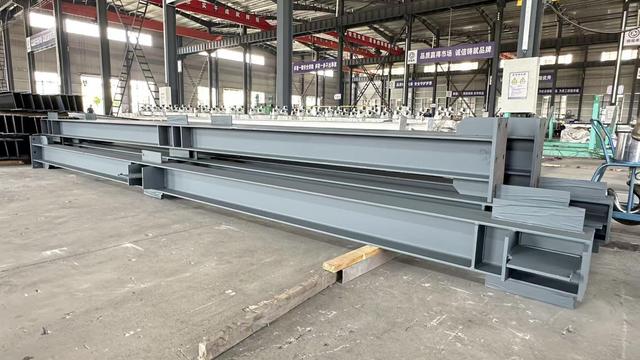
By integrating advanced structural designs such as H-sections, portal frames, and honeycomb beams, today's manufacturing plants can achieve monumental clear-span widths exceeding 100 meters. This architectural freedom optimizes workflow designs for modern automated manufacturing lines and robotic logistics hubs, directly impacting the operational efficiency and profitability of major multinational enterprises.
Rapid Structural Deployment: Modular assembly lines reduce field erection times by up to 50% compared to traditional on-site concrete casting.
Low Lifecycle Costs: Pre-galvanized coatings and multi-layer corrosion-resistant paint systems ensure structural lifetimes exceeding 50 years with minimal routine maintenance.
Seismic and Wind Load Capacity: High ductility allows the framework to absorb and dissipate energy during earthquakes or category-5 hurricane winds.
Explore our highly-engineered prefabricated solutions, built to international specifications for industrial, commercial, and modular office applications.
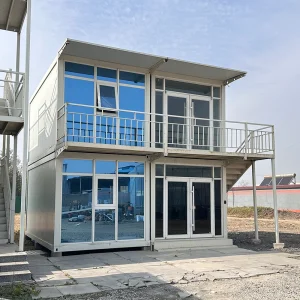
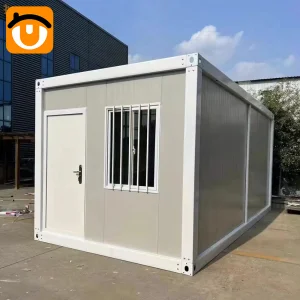
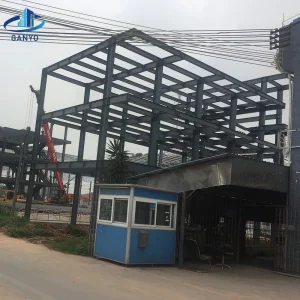
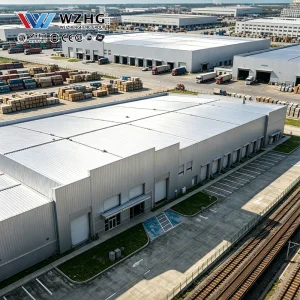
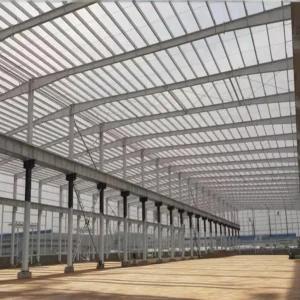
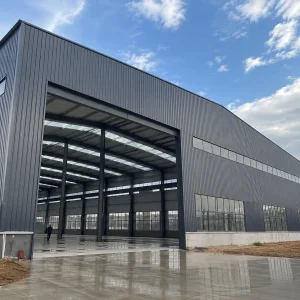
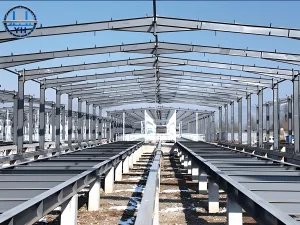
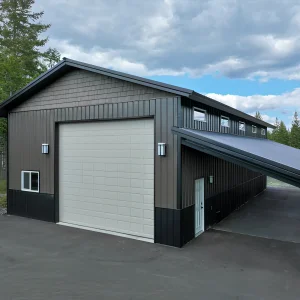
Understanding the critical technical metrics, compliance standards, and risk-management strategies expected by tier-1 global infrastructure buyers.
Global procurers prioritize compliance with regional structural designs. Whether designing according to IBC (International Building Code), Eurocode 3 (EN 1993), AISC (American Institute of Steel Construction), or AS/NZS standards, all calculations must be backed by authenticated structural engineering reports.
For maritime, coastal, or high-humidity tropical zones, anti-corrosion is the foremost priority. Projects demand specific hot-dip galvanization classes (e.g., Z275, Z600) and epoxy zinc-rich priming layers to guard against chloride corrosion, preventing catastrophic premature structural failures.
Every day a construction site remains inactive represents lost operational revenue. Global EPC (Engineering, Procurement, and Construction) companies seek modular, containerized, and bolt-connection designs that bypass the requirement of extensive field-welding, lowering the local labor barrier.
Tailored structural configurations designed to resist Richter-scale events, utilizing dynamic response analyses and customized portal frame bracing designs.
Applying state-of-the-art polyurethane (PU), polyisocyanurate (PIR), or rockwool composite sandwich panels to ensure compliance with green energy certifications.
Advanced aerodynamic structures engineered for extreme windward regions, utilizing double-sloped portal configurations, robust wind column bracings, and specialized seam roof panels.
| Structural Indicator | Standard Specification | Dhingia Engineered Baseline |
|---|---|---|
| Steel Grade Strength | ASTM A572 / EN 10025 | Q355B / Q460D (High Tensile Strength) |
| Wind Load Resistance | ASCE 7-16 / BS EN 1991 | Up to 280 km/h (Custom Engineered) |
| Corrosion Protection | ISO 12944 (C1-C5 Categories) | Hot-Dip Galv. / Polyurethane Finish |
| Design Software System | Tekla Structures / PKPM | BIM Integration & Clash-Detection |
Combining heavy automation, downstream integration, and localized maritime logistics hubs to drive down structural delivery lead times.
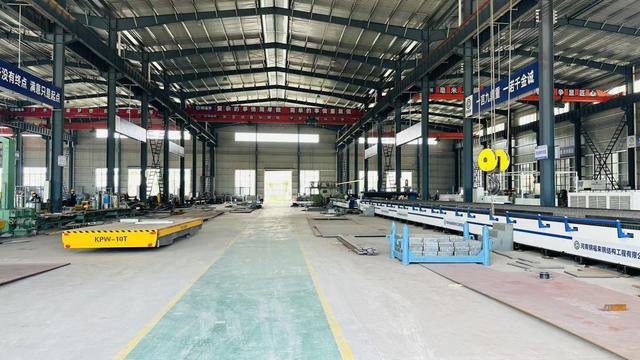
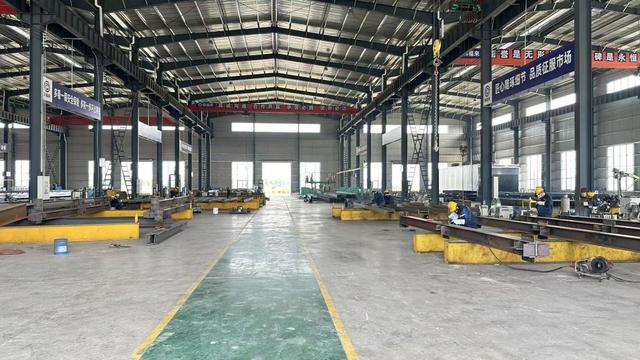
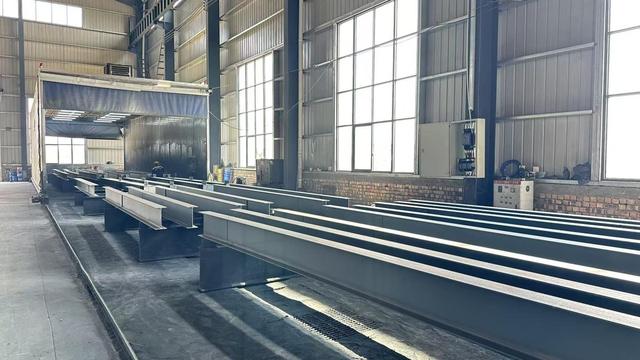
Automated submerged arc welding lines eliminate human inconsistencies in weld penetration, assuring highly stable fatigue load profiles for large multi-span portal frame assemblies.
By managing structural design, raw steel optimization, panel profiling, and fastener fabrication under one roof, we eliminate intermediate processing delays and design errors.
Located adjacent to the world's most active deepwater ports in Southern China, our logistics workflow guarantees efficient bulk loading, minimizing land-to-sea transit times.
A global catalog of customized configurations tailored to regional environments, local building codes, and project budgets.
Applied Geography: Southeast Asia (e.g., Thailand, Vietnam, Philippines), Pacific Islands, Coastal West Africa.
Structures in these regions face humid microclimates, typhoons, and heavy rainfall. High-build epoxy coatings and double-locked standing seam roof profiles protect metal parts from corrosion while ensuring leak-free performance during prolonged monsoon downpours.
Applied Geography: Northern Europe, Canada, Central Asia.
Requires steel designs optimized for heavy snow and sub-zero temperatures. We incorporate high-insulation PIR sandwich cladding to eliminate thermal bridging, combined with high-grade structural steel that maintains impact toughness under extreme cold conditions.
Applied Geography: Remote Australian Outback, South American Andes, African Mine Sites.
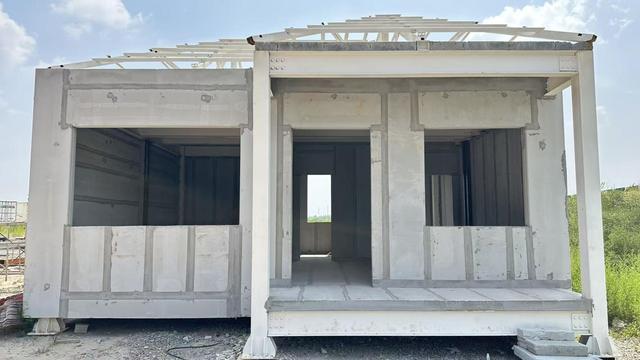
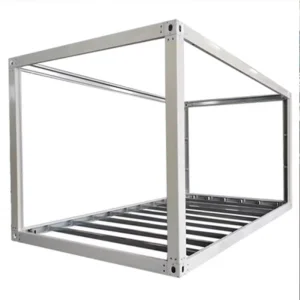
Uses modular, detachable, flat-packed steel container units. Features simplified foundation requirements and pre-installed electrical and plumbing systems, enabling fast on-site erection by local crews without heavy hoisting gear.
Guangzhou Dhingia Build Co., Ltd. is a professional China pre-engineered metal building manufacturer specializing in industrial steel structure solutions for customers around the world.
Guangzhou Dhingia Build Co., Ltd. is a professional China pre-engineered metal building manufacturer specializing in industrial steel structure solutions for customers around the world. With extensive expertise in steel construction engineering and prefabricated building technologies, the company is dedicated to providing high-quality, cost-effective, and customized building systems for diverse industrial and commercial applications.
The company offers a wide range of products, including pre-engineered metal buildings, industrial steel structures, steel warehouses, manufacturing plants, logistics centers, commercial buildings, workshop facilities, and custom-engineered construction solutions. Designed to meet international standards, these building systems are known for their structural strength, rapid installation, long service life, and excellent cost efficiency.
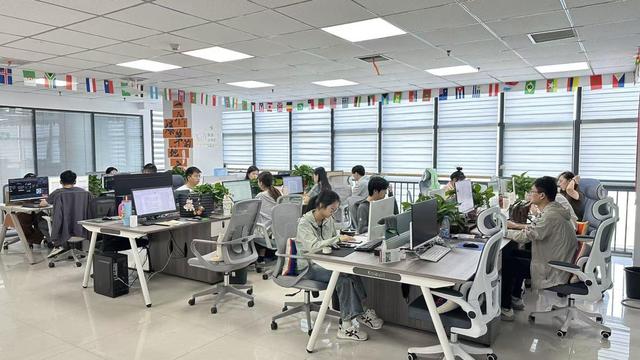
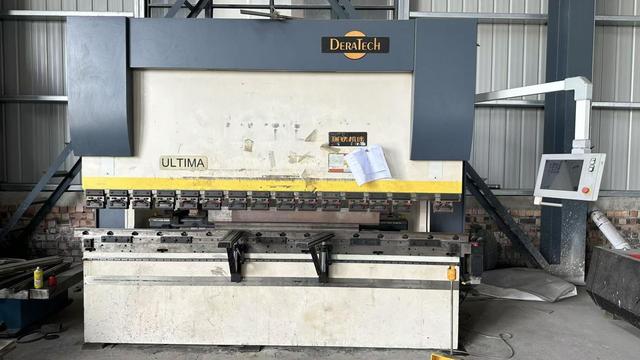
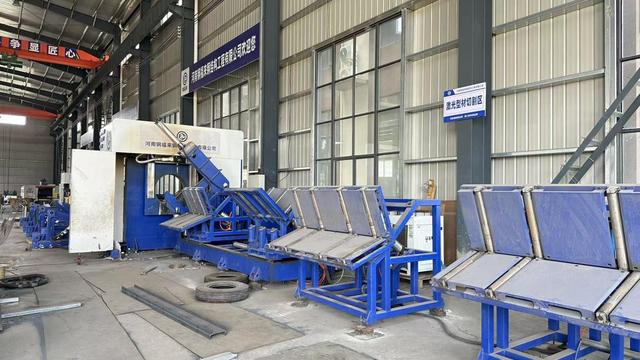
Guangzhou Dhingia Build Co., Ltd. operates modern manufacturing facilities equipped with advanced steel fabrication machinery, automated production lines, and comprehensive quality inspection systems. Supported by an experienced team of engineers, designers, and project managers, the company provides one-stop services covering project consultation, structural design, engineering analysis, manufacturing, quality control, and international logistics coordination.
Innovation and quality are fundamental to the company's development strategy. By integrating advanced design software and precision manufacturing technologies, Dhingia Build delivers reliable steel structure solutions that help customers reduce construction time, minimize labor costs, and improve overall project efficiency. The company's products are widely used in industrial production facilities, warehouses, agricultural buildings, commercial complexes, infrastructure projects, and large-scale storage applications.
Committed to the principles of quality, integrity, and customer satisfaction, Guangzhou Dhingia Build Co., Ltd. has established strong partnerships with clients across Asia, Europe, the Middle East, Africa, and the Americas. The company continues to provide innovative industrial steel structure solutions that support sustainable growth and create long-term value for global customers.
Analyzing key advancements in modern metal infrastructures: structural design innovations, smart materials, and sustainability goals.
As industries strive to meet corporate carbon-neutrality targets, steel factories are focusing on reducing embodied energy. By shifting toward electric arc furnace (EAF) production powered by renewable energy and optimizing structural profiles to save raw materials, modern designs can reduce overall carbon footprints by up to 30%.
Future steel buildings will function as integrated structural ecosystems. Wall and roofing elements are now being engineered to incorporate solar systems (BIPV) and smart sensor systems, which track structural health by monitoring real-time stresses and deformations during environmental occurrences.
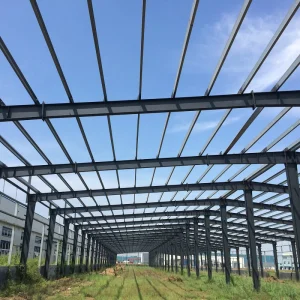
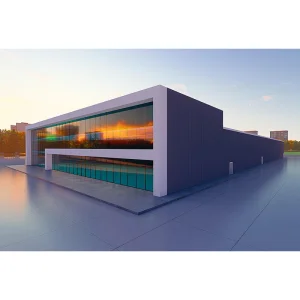
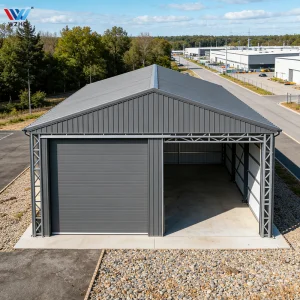
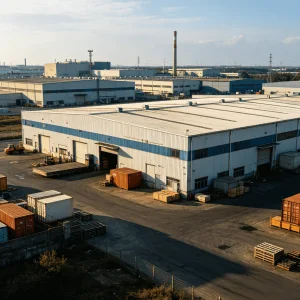
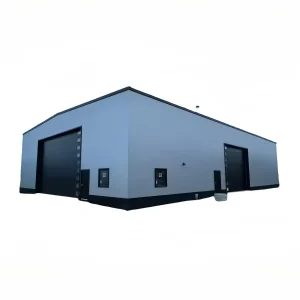
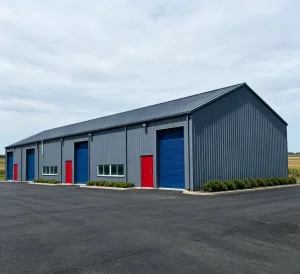
Explore the second segment of our global product lineup, showcasing large-span portal frames, industrial workshops, and specialized warehouses.
Technical answers to common engineering, procurement, and logistical questions faced by structural steel purchasers.
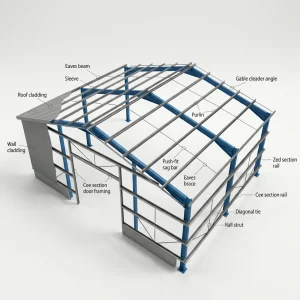
H-sections (hot-rolled or welded built-up members) function as primary structural components (columns and beams) that carry high axial loads, bending moments, and shear forces. Cold-formed C/Z purlins serve as secondary structural members, transferring loads from roof and wall cladding panels to the primary frame. Combining these components provides a light weight yet highly robust structural system.
Every batch of raw steel plate or section is sourced from tier-one state mills and accompanied by Mill Test Certificates (MTCs) verifying mechanical properties and chemical compositions. Throughout production, raw materials undergo ultrasonic testing (UT) and magnetic particle testing (MT) at critical weld joints. Each member receives a unique ID label for tracking through CNC cutting, assembly, coating, and transport.
All main structural components are bundled with steel strapping and protective edge pads, while secondary framing parts (like purlins) are nested into secure steel racks. Small accessories, fasteners, and flashing are packaged in wood crates. Critical components are arranged sequentially to match erection phases, simplifying unloading and sorting at the jobsite.
Yes. Our engineering team designs structures to withstand seismic forces by utilizing specialized braced frames, moment-resisting connections, and high-ductility steel grades. Using structural calculation programs like PKPM, Tekla, and 3D3S, we simulate local seismic design loads to ensure compliance with seismic building codes.
For temperature-controlled warehouses, cold storage, or food processing environments, we recommend polyisocyanurate (PIR) or polyurethane (PU) core sandwich panels with tongue-and-groove joint systems. These core materials provide low thermal conductivity and excellent fire performance, helping maintain internal temperatures and reduce energy consumption.
 Dhingia Build