High-performance structural steel components and system configurations designed to meet rigorous regional demands, seismic safety rules, and operational load requirements.
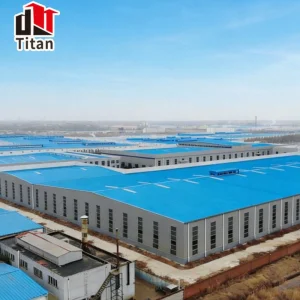
The Nagoya metropolitan area, encompassing Aichi, Gifu, and Mie prefectures (often termed the Tokai region), is historically and structurally the most powerful manufacturing powerhouse in Japan. Unlike service-heavy Tokyo or commercial-focused Osaka, Nagoya's regional GDP is overwhelmingly driven by real manufacturing output—spanning automotive production (headquartered by Toyota Motor Corporation and its thousands of primary and secondary suppliers), aerospace components, machine tools, and heavy materials fabrication.
For industrial developers, structural engineers, and logistics companies, locating facilities in the Nagoya market requires a deep understanding of unique constraints:
"Nagoya's manufacturing ecosystem is built on extreme spatial efficiency and zero-tolerance for logistics downtime. Pre-engineered steel buildings must offer modular flexibility and high crane support structures to fit Toyota-style Just-In-Time (JIT) production tracks."
Industrial facilities have evolved from simple brick-and-mortar storage structures into highly complex, integrated production machines. Modern warehouses and factories must act as organic modules in a global, tech-driven supply chain.
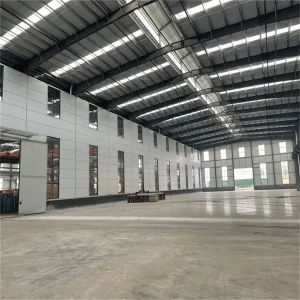
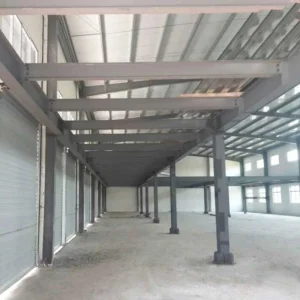
High-bay storage and Automated Guided Vehicles (AGVs) require ultra-flat concrete slabs and massive clear-span steel portals. Column-free zones allow machinery layouts to adapt dynamically as production needs change.
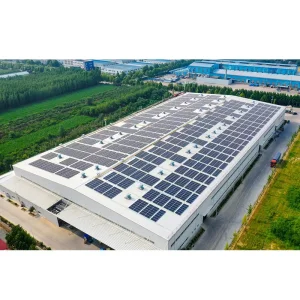
Structural steel is highly recyclable, aligning with corporate sustainability initiatives. Modern pre-engineered systems are designed to bear solar panel arrays and support energy-efficient insulation systems.
With industrial spaces facing climate extremes and geological volatility, structural frames are engineered with high-strength structural members to prevent catastrophic collapse under extreme loads.
For Japanese and global procurers looking at Nagoya industrial expansion, utilizing pre-engineered structural steel fabricated in China offers unparalleled competitive leverage in cost and efficiency.
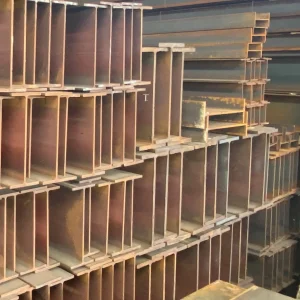
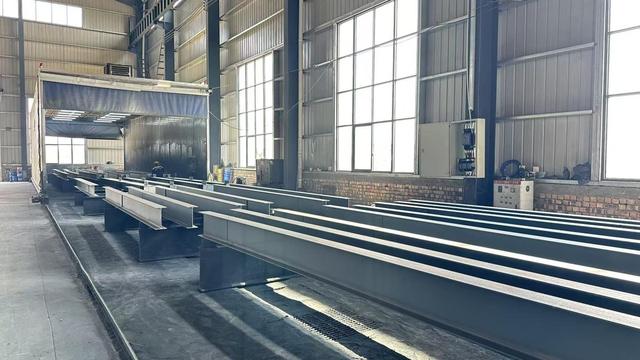
China produces more than half of the world's crude steel. This domestic raw-material supply means fabricators have immediate, low-cost access to all structural classes, including high-strength carbon steel, specialized H-beams, and heavy plate profiles. It eliminates the long procurement cycles common in domestic Japanese supply chains.
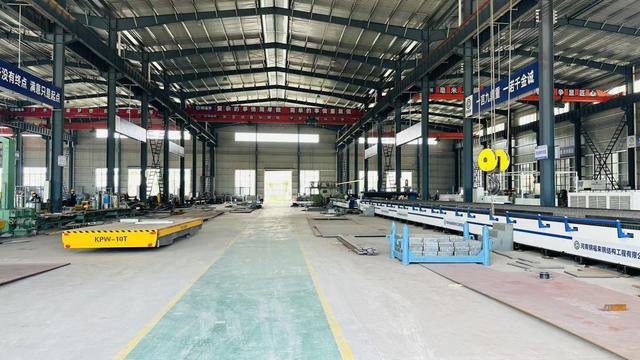
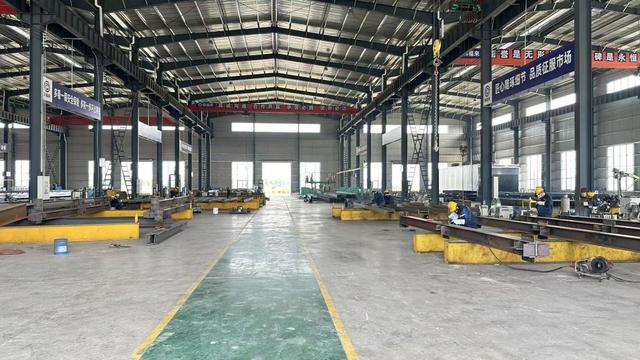
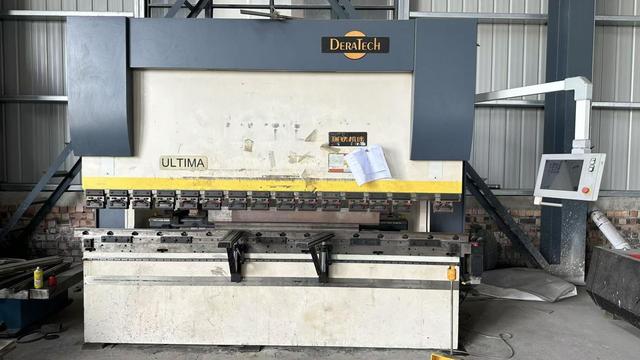
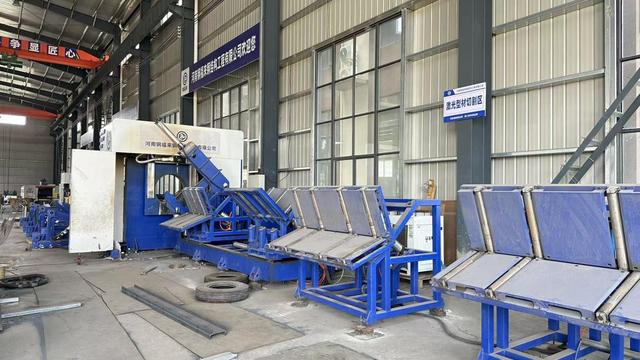
Chinese export-oriented manufacturing plants feature heavy investments in robotics and automation, including multi-head submerged arc welding, automated CNC plasma cutters, and integrated shot-blasting machines. These ensure dimensional tolerances that meet or exceed standard Japanese structural requirements.
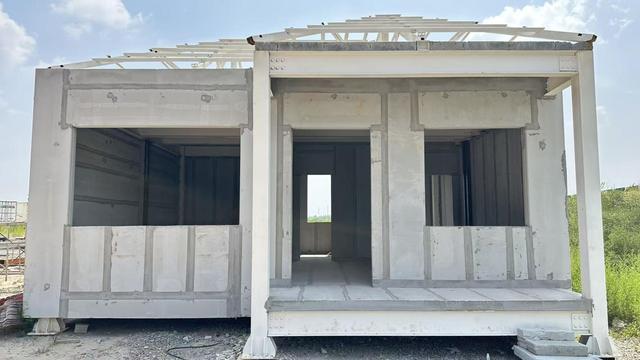
By pre-assembling wall panels, roof trusses, and column systems in the factory, the actual on-site build-time in Nagoya is reduced by up to 50%. This directly reduces local labor costs in Japan, where skilled construction labor remains scarce and expensive.
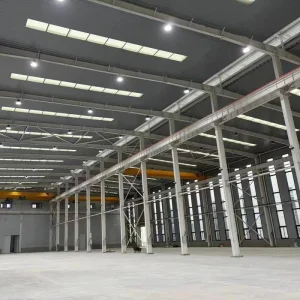
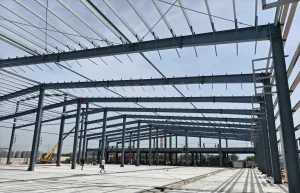
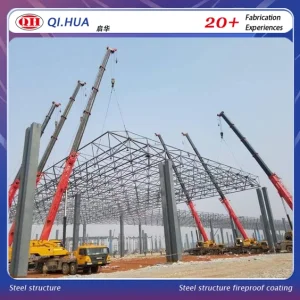
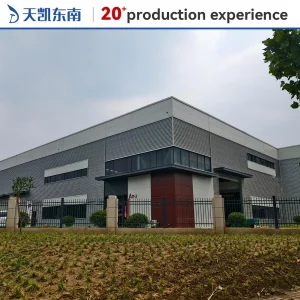
Heavy industrial buildings are not one-size-fits-all. Specialized architectural and structural layouts must align with the distinct sub-industries active across Nagoya's industrial landscape.
Locations: Toyota City, Kariya, Anjo.
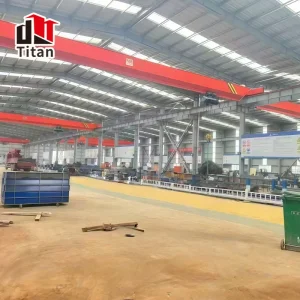
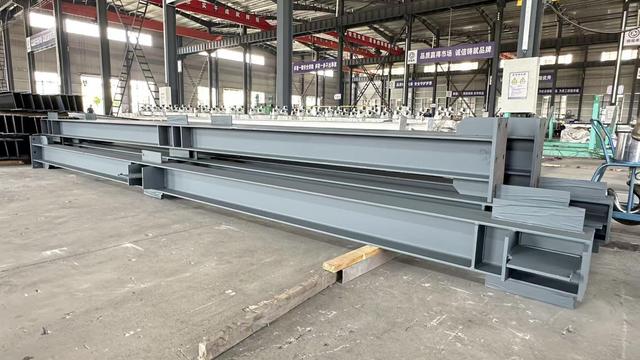
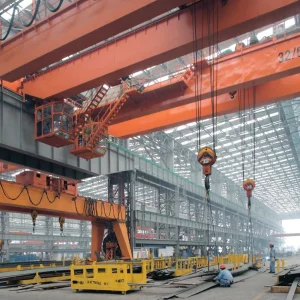
These facilities house massive mechanical stamping presses and high-speed robotic assembly lines. Our heavy-duty structures are engineered to handle continuous dynamic vibrations and are built to support 10-ton to 50-ton overhead cranes. These cranes run on runway systems integrated directly into the main H-beam support columns.
Locations: Port of Nagoya, Tobishima, Yatomi.
Faced with salt air corrosion and damp costal foundations, buildings here require advanced hot-dip galvanized coating processes (exceeding 600g/m²) and specialized anti-corrosion marine-grade painting. Sandwich wall panels must also deliver high thermal insulation performance for refrigeration purposes.
Guangzhou Dhingia Build Co., Ltd. is a professional China pre-engineered metal building manufacturer specializing in industrial steel structure solutions for customers around the world. With extensive expertise in steel construction engineering and prefabricated building technologies, the company is dedicated to providing high-quality, cost-effective, and customized building systems for diverse industrial and commercial applications.
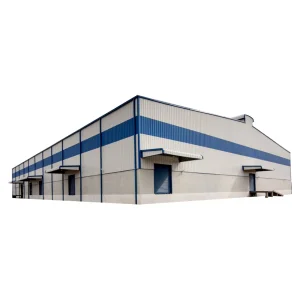
The company offers a wide range of products, including pre-engineered metal buildings, industrial steel structures, steel warehouses, manufacturing plants, logistics centers, commercial buildings, workshop facilities, and custom-engineered construction solutions. Designed to meet international standards, these building systems are known for their structural strength, rapid installation, long service life, and excellent cost efficiency.
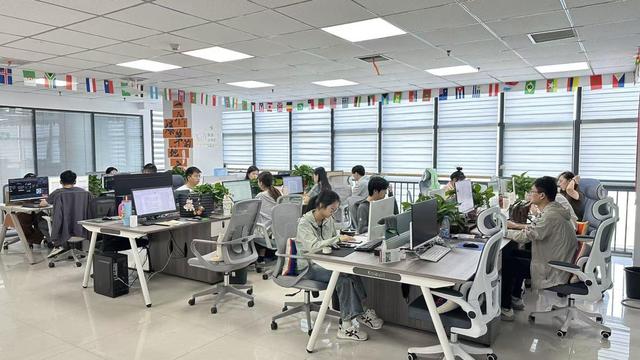
Guangzhou Dhingia Build Co., Ltd. operates modern manufacturing facilities equipped with advanced steel fabrication machinery, automated production lines, and comprehensive quality inspection systems. Supported by an experienced team of engineers, designers, and project managers, the company provides one-stop services covering project consultation, structural design, engineering analysis, manufacturing, quality control, and international logistics coordination.
Innovation and quality are fundamental to the company's development strategy. By integrating advanced design software and precision manufacturing technologies, Dhingia Build delivers reliable steel structure solutions that help customers reduce construction time, minimize labor costs, and improve overall project efficiency. The company's products are widely used in industrial production facilities, warehouses, agricultural buildings, commercial complexes, infrastructure projects, and large-scale storage applications.
Committed to the principles of quality, integrity, and customer satisfaction, Guangzhou Dhingia Build Co., Ltd. has established strong partnerships with clients across Asia, Europe, the Middle East, Africa, and the Americas. The company continues to provide innovative industrial steel structure solutions that support sustainable growth and create long-term value for global customers.
As modern industrial plants look toward 2030, our engineering designs incorporate key technical developments to guarantee safety, adaptability, and high energy efficiency.
We design structures incorporating buckling-restrained braces (BRBs) and shear damper components. These absorb earthquake energy and safeguard the primary columns, minimizing downtime after geological events.
Utilizing PIR (polyisocyanurate) cores in our sandwich panels offers superior thermal performance. This reduces cooling requirements during Nagoya's humid summers and retains heat in winter.
Our design process utilizes BIM (Building Information Modeling). This prevents layout clashes between heavy steel columns and interior HVAC, machinery, or utility lines, ensuring smoother project execution.
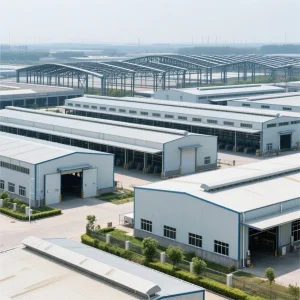
Explore our collection of structural systems and prefabricated metal buildings engineered for global logistics hubs and high-output industrial plants.
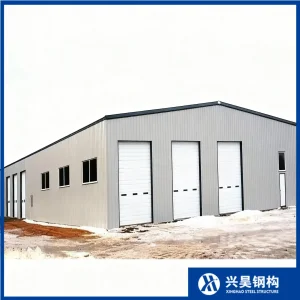
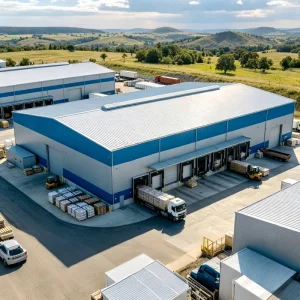
Procuring pre-engineered steel buildings internationally requires careful consideration of structural certification, logistics planning, and manufacturing timelines.
Ensure the engineering design aligns with localized load profiles. For Japan, this means validating calculations against regional snow loads (particularly relevant in areas surrounding Gifu) and wind loads (up to 42m/s near coastal zones in Aichi).
Specify Ultrasonic Testing (UT) or Magnetic Particle Testing (MT) for critical H-beam welded joints. Dhingia Build provides full material traceability sheets and inspection reports for all exported shipments.
Large steel framing parts must be bundled to prevent damage during shipping. We load structural members into open-top or standard high-cube containers, optimizing cargo density to lower shipping rates into the Port of Nagoya.
To ensure smooth structural assembly, we provide detailed layout drawings, anchor bolt location patterns, and matching part marks. We also offer remote or on-site engineering support to guide local setup crews.
Whether you are expanding automotive parts production, setting up port logistics infrastructure, or building specialized cold-storage facilities in Aichi Prefecture, Dhingia Build delivers cost-effective structural steel framing that meets strict quality requirements.
 Dhingia Build