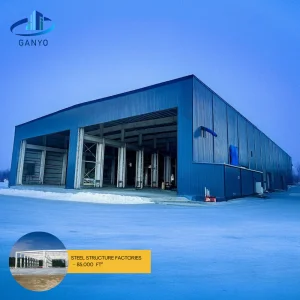
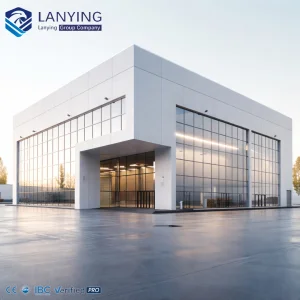
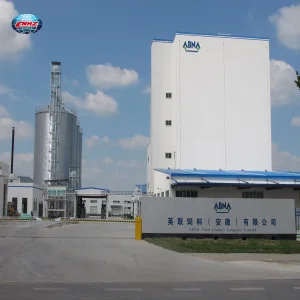
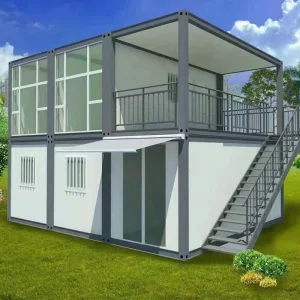
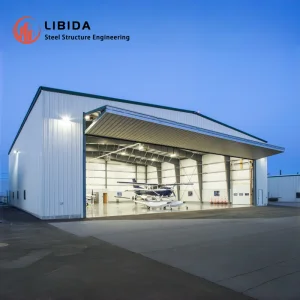
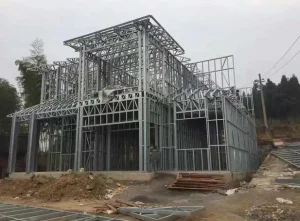
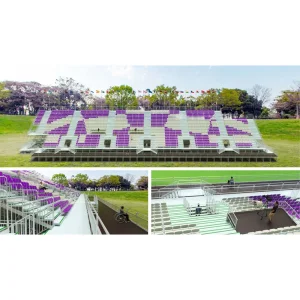
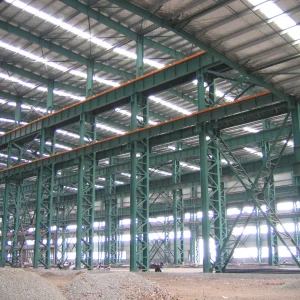
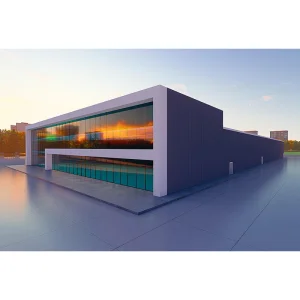
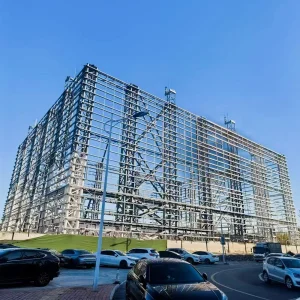
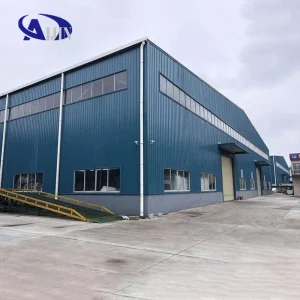
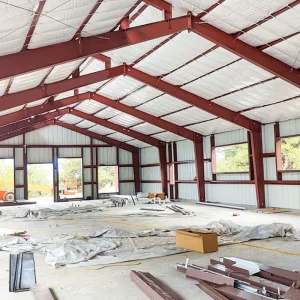
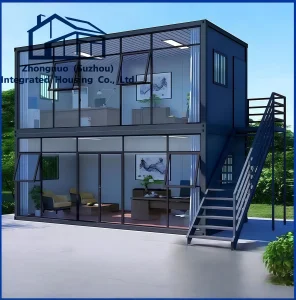
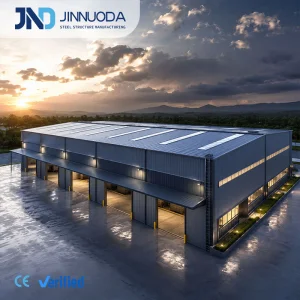
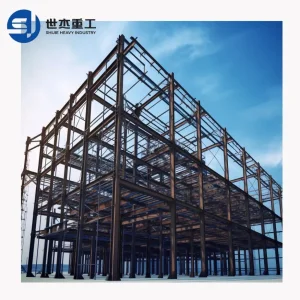
Explore our core pre-engineered structures designed to house heavy-duty automated storage, logistics handling equipment, and specialized industrial workflows.
In the high-speed era of global commerce, warehousing is no longer just about static storage; it is the heartbeat of supply chain speed, agility, and efficiency. The global transition toward Automated Storage and Retrieval Systems (AS/RS) has highlighted the critical role of physical infrastructure. High-bay racking frameworks, multi-tier automated shuttle corridors, and custom OEM steel storage units represent the backbone supporting advanced robotics, AI-driven sorting mechanisms, and heavy payload cranes.
As a leading custom OEM automated storage structures manufacturer, Guangzhou Dhingia Build Co., Ltd. integrates structural engineering, metallurgy, and robotic-precision tolerances. We provide global supply chains with the high-performance steel framing essential for heavy-payload automated operations. From long-span warehouse structures to prefabricated complex frame assemblies, our systems are optimized to handle severe static and dynamic load distributions.
High-bay stacker cranes require structural deflection tolerances measured in millimeters. Our OEM structural frameworks are manufactured with automated precision to prevent crane collision and system downtime.
We deploy advanced engineering analysis to design automated storage structural systems capable of dissipating seismic energy, safeguarding high-value inventory and mechanical systems.
Applying high-grade epoxy coats, hot-dip galvanization, and weathering steel configurations ensures our custom metal infrastructure survives harsh cold-chain or industrial environments.
Purchasing agents and supply chain directors from Fortune 500 enterprises face unique structural challenges when selecting storage configurations for automation. A minor compromise in manufacturing quality, steel grade compliance, or joint rigidity can render an entire multi-million dollar automated stacker crane system inoperable. Below is a detailed assessment of procurement demands across key regions:
In the US and Canada, structural building codes (like AISC, RMI - Rack Manufacturers Institute, and FEMA regulations) enforce strict parameters on load capacity and emergency response. Facilities integrating high-bay automated racking systems require pre-engineered metal frame designs optimized for specific wind speeds, snow loads, and local seismic acceleration values. The integration of structural steel (e.g., Q355B or ASTM A572 Grade 50 equivalents) guarantees that the structural frames are rigid enough to resist the dynamic kinetic forces exerted by high-speed Automated Guided Vehicles (AGVs) and shuttle storage units.
European purchasers demand compliance with EN 1090-2 (Execution of steel structures) and Eurocode 3 standards. Environmental sustainability and thermal performance are also major factors. Cold-chain storage applications in the EU prefer "rack-clad buildings," where the racking structure itself supports the roof and wall cladding. This specialized design requires precise geometric alignments during fabrication. Guangzhou Dhingia Build Co., Ltd. supports these projects with precise engineering design and manufacturing protocols that conform to global structural guidelines.
With the explosive expansion of e-commerce, APAC projects require accelerated project delivery. Pre-engineered steel building systems play a vital role here. By utilizing modular, prefabricated, fast-assembly columns, rafters, and secondary structures, multi-story warehouse projects can be completed up to 50% faster than conventional civil structures. This speed directly reduces field-welding costs and minimizes dependency on expensive local construction crews.
Guangzhou Dhingia Build Co., Ltd. implements state-of-the-art design suites, including Tekla Structures, AutoCAD, and PKPM, to carry out structural analysis and 3D modeling. This visual approach ensures that automated storage systems integrate smoothly with structural columns, bracing, mezzanine levels, and crane runways, avoiding field modifications.
Our custom OEM solutions cover the complete project lifecycle: structural engineering, precise manufacturing, strict quality checks, and logistics coordination. This complete service model ensures our building systems provide excellent performance, rapid assembly, and a long service life.
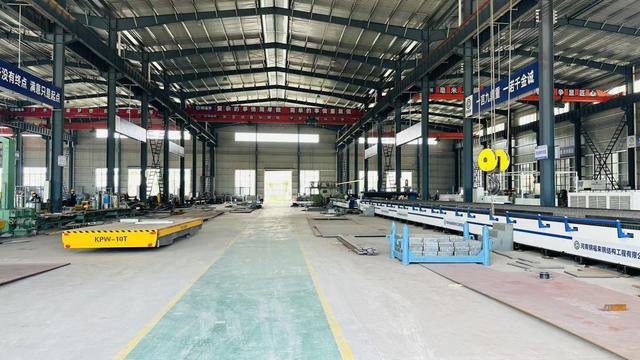
Why do global logistics and storage system providers partner with Guangzhou Dhingia Build Co., Ltd. for their OEM structural assemblies? The answer lies in the intersection of advanced manufacturing technology, localized supply chain integration, and deep engineering expertise.
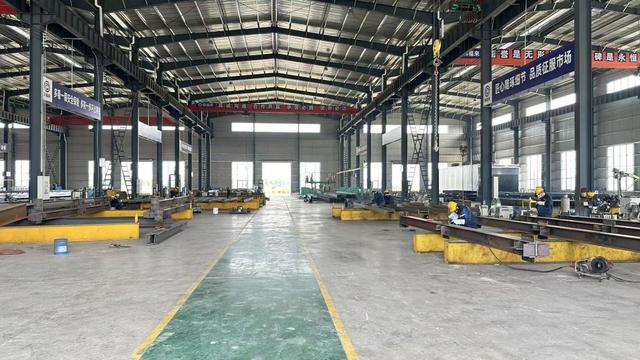
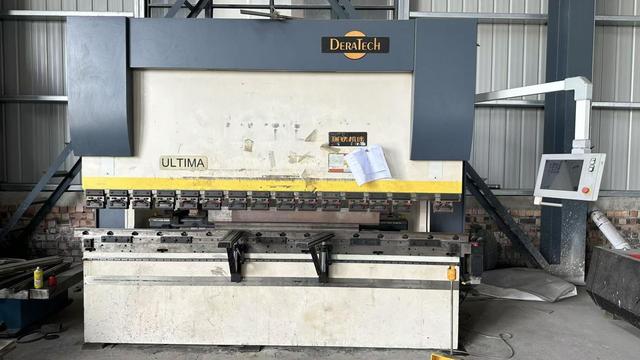
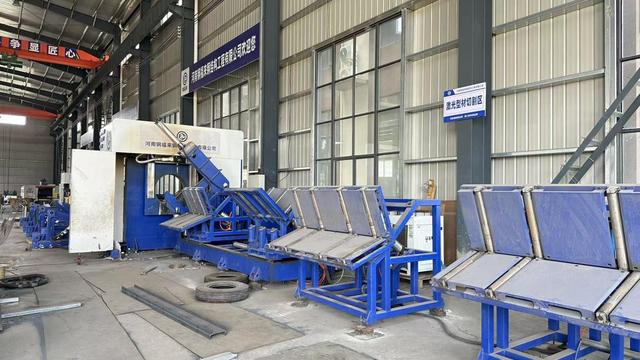
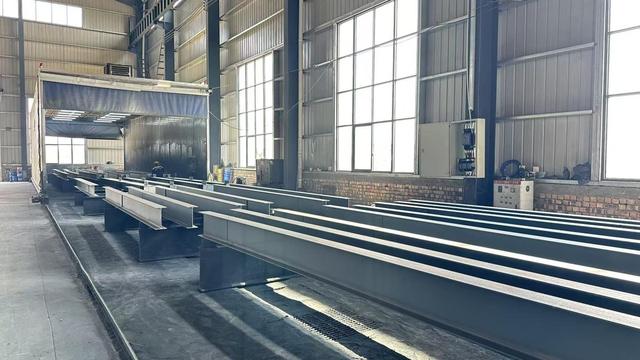
Our production facilities feature advanced CNC plasma cutters, automated beam assembly lines, multi-arc submerged welding machines, and dedicated shot-blasting equipment. By automating these primary fabrication processes, we ensure consistent welding penetration, precise bolt-hole alignments, and clean surface finishes for protective coatings. This manufacturing precision is essential for automated storage platforms, where vertical deviation tolerances must be kept within strict limits to support smooth shuttle operations.
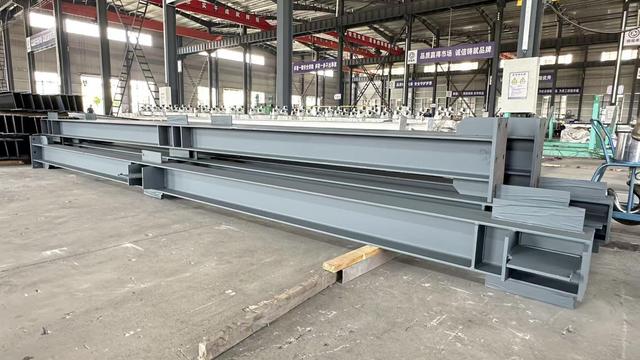
All raw steel plates, profiles, and secondary structural components are sourced from reputable state-owned mills and accompanied by Mill Test Certificates (MTC). Every production run undergoes strict quality inspections, including Ultrasonic Testing (UT) or Magnetic Particle Testing (MT) for load-bearing weld seams, guaranteeing structural reliability in heavy industrial projects.
We provide a single source of coordination from raw design to global logistics. Our experienced engineering division helps translate local building design parameters into cost-efficient, structural-steel prefabricated frames, managing issues related to transport load limits and international shipping configurations.
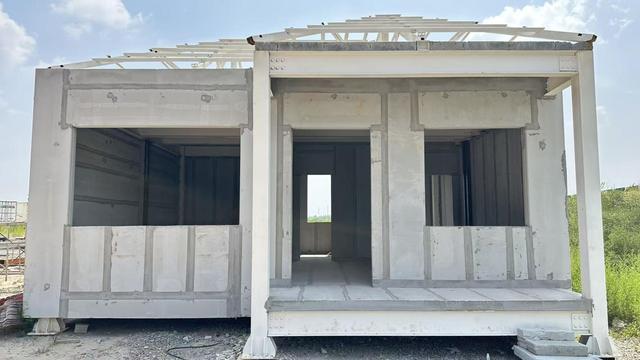
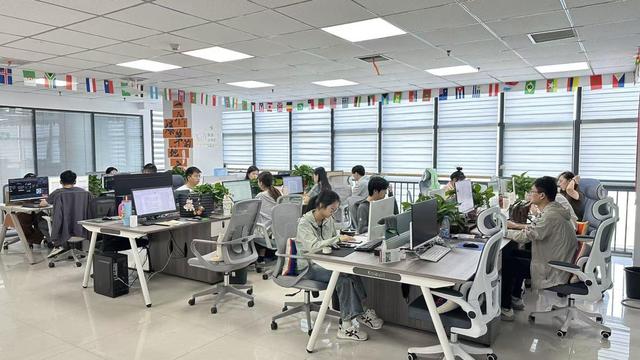
Automated storage structures must operate in diverse settings, each with its own load requirements, climate issues, and automation layouts.
Designed to optimize footprint efficiency in urban areas. These layouts require heavy-duty columns (H-sections or box girders) capable of supporting large axial loads while keeping sway deformation to a minimum.
Sub-zero cold storage operations demand materials with high low-temperature impact toughness to prevent brittle fracturing. Standard carbon steel can lose its ductility at low temperatures, making proper material selection essential.
Designed for tooling, dies, and steel coil inventories. These platforms require robust heavy steel frames, thick floor plates, and structural connections capable of managing significant dynamic crane impacts.
Contact Dhingia Build engineers for a personalized evaluation of your custom structural warehouse requirements.
Detailed technical answers for procurement directors, structural engineers, and facility planners evaluating OEM storage structures.
Manual forklift racking systems tolerate larger deflections and slight misalignments because drivers visually correct their approach. Automated Storage and Retrieval Systems (AS/RS), however, rely on high-speed stacker cranes, laser guidance, and robotic shuttles. If a frame column shifts or bows beyond tight tolerance limits, sensors will trigger an emergency halt, shutting down operations. We manufacture our structural components to precise standards to ensure reliable, continuous operation.
We primarily use Q355B and Q235B steel. Q355B (equivalent to ASTM A572 Grade 50 or European S355JR) is preferred for major structural elements like main frame columns, rafters, and high-stress points due to its excellent yield strength. For secondary members such as purlins, girts, and bracing, we utilize Q235B (comparable to ASTM A36 or European S235JR), which provides cost-efficient structural support without adding unnecessary weight.
To prevent rust during overseas transport and long-term operations, we offer hot-dip galvanization (complying with ASTM A123/EN ISO 1461 standards) and multi-layer epoxy coating systems. Hot-dip galvanization is highly recommended for outdoor platforms, humid environments, and cold storage facilities, as the zinc coating provides long-lasting sacrificial protection.
Yes. Our engineering department uses international structural analysis software to calculate loads according to specific site coordinates. By inputting local variables (such as ground acceleration, max wind speeds, and potential snow buildup), we optimize steel dimensions and connection detailing to ensure the structure complies with regional building regulations.
Lead times depend on the scale and complexity of the structural design. Standard pre-engineered buildings generally enter production within 2 to 3 weeks after drawing approval, with manufacturing completed in 4 to 6 weeks. Our factory team handles container loading configurations to prevent transit damage and maximize space utilization, reducing international logistics costs.
Explore our additional pre-engineered steel buildings, multi-story frameworks, and prefabricated materials suited for global warehousing, commercial projects, and industrial expansion.
 Dhingia Build