Engineered to comply with Eurocodes and local urban planning standards, optimized for immediate logistics and industrial operations.
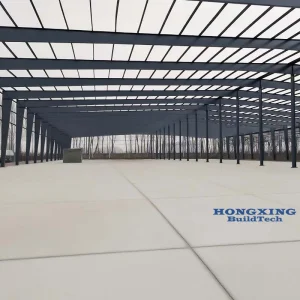
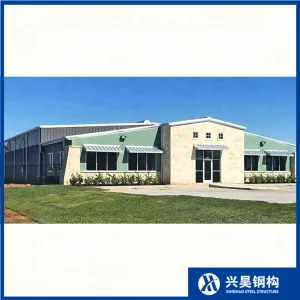
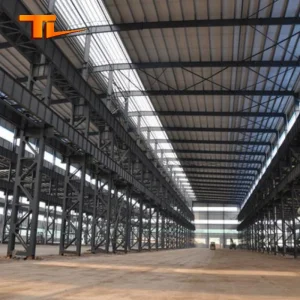
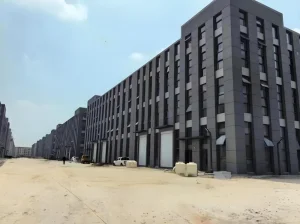
The Paris metropolitan area, or Île-de-France, stands as one of the most critical economic powerhouses in Europe, generating over 30% of France's GDP. As consumer demand transitions toward rapid delivery and e-commerce models, the logistics market in Paris faces a severe structural squeeze. Available land is limited, highly protected under strict French zoning laws, and subject to the Plan Local d'Urbanisme (PLU). For developers and manufacturers, this translates to an absolute imperative: maximizing spatial efficiency while minimizing construction footprints.
Modern storage facility designs in this market must address complex constraints. They must align with the demanding French RE2020 environmental regulations, which mandate low carbon footprints, high thermal performance, and integration compatibility with renewable energy systems like solar arrays. Prefabricated steel structural frames from Guangzhou Dhingia Build Co., Ltd. provide the ideal framework for these high-performance systems. Our building packages feature rapid structural assembly, allowing developers to quickly establish compliant, durable, and seismically secure facilities without disrupting local peri-urban ecosystems.
Globally, the industrial storage and warehousing sector is undergoing a massive transformation. Driven by supply chain vulnerabilities exposed over the last five years, multinational corporations are shifting from "Just-in-Time" inventory systems to "Just-in-Case" risk mitigation models. This strategic shift requires localized, high-capacity warehousing facilities equipped with modern, automated, and vertical material handling systems.
Additionally, the globalization of the cold chain network, fueled by pharmaceuticals and fresh food distribution, requires warehouses to deliver precise thermal barrier integration. This demand has made conventional construction obsolete. High-performance, prefabricated, and pre-engineered steel buildings are now the global standard. They offer the structural stability required for heavy automated racking systems and the clean spans needed for optimized layout configurations.
Unlocking Manufacturing Excellence, Speed-to-Market, and High Structural Reliability
Guangzhou Dhingia Build Co., Ltd. is a leading China pre-engineered metal building manufacturer specializing in industrial steel structure solutions for customers around the world. With extensive expertise in steel construction engineering and prefabricated building technologies, we deliver custom-engineered systems designed to meet rigorous international design standards, including the Eurocodes, AISC, and GB codes.
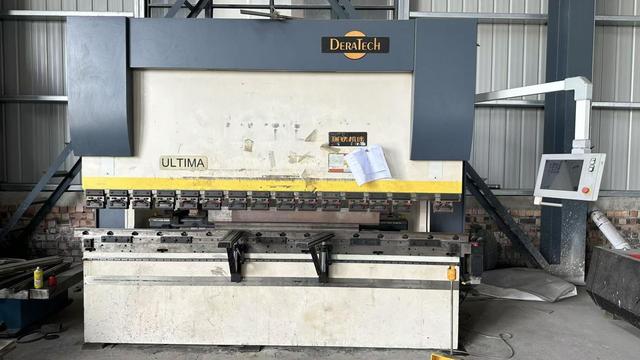
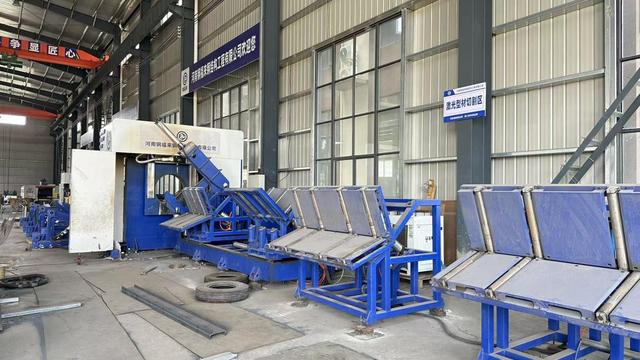
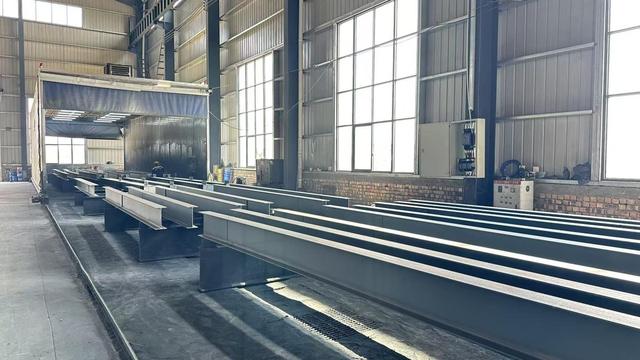
By leveraging advanced pre-engineered fabrication methodologies in China, we bypass the conventional, on-site labor-intensive construction delays. All main structural members—including H-beams, box columns, trusses, and purlins—are pre-cut, pre-punched, and robotically welded under strict factory-controlled parameters. This precise factory fabrication ensures that the structures can be erected on-site in Paris up to 50% faster than traditional concrete or field-welded alternatives, significantly reducing local labor costs and site disturbance.
Innovation and quality form the backbone of our operational philosophy. Through integration of advanced structural modeling and detailing software, we optimize raw steel utilization, passing the material and design cost savings directly to our clients. Our strategic proximity to the Port of Guangzhou ensures efficient logistics pipelines to major European ports like Le Havre and Marseille, backed by streamlined international documentation and customs compliance support.
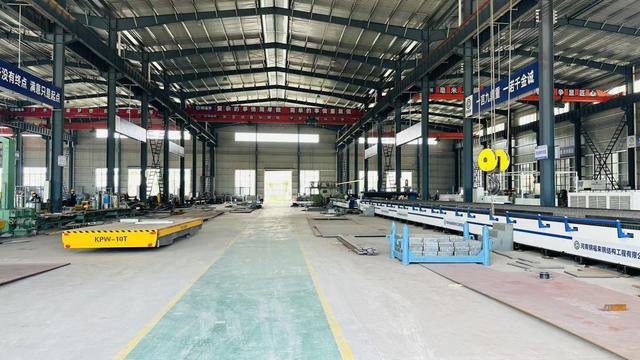
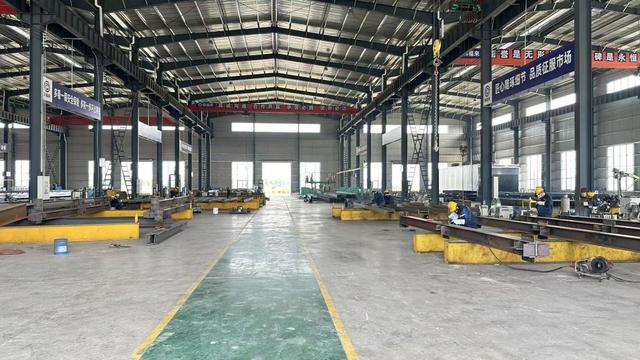
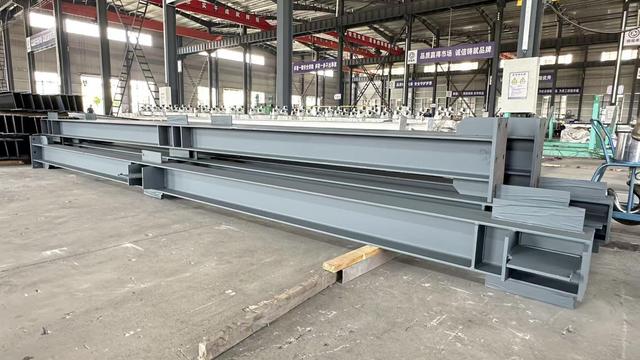
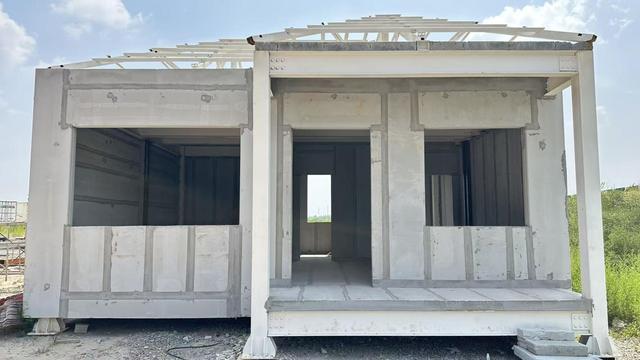
Adapting steel structural components to address localized architectural, logistic, and physical constraints.
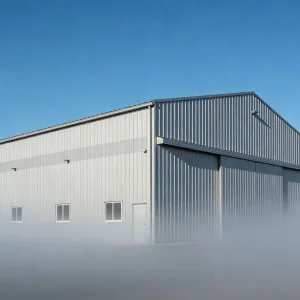
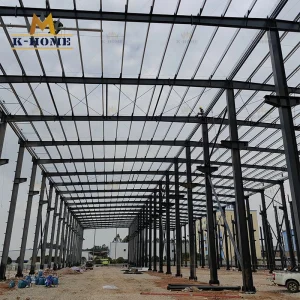
Located near crucial arterial rings like the A86 and Francilienne, these structures are optimized for distribution fleets. Clear spans enable efficient sortation system design and smooth vehicle maneuvering.
Engineered for full integration with high-efficiency polyurethane insulated sandwich panels, meeting R-value requirements for storage hubs in the Rungis International Market region.
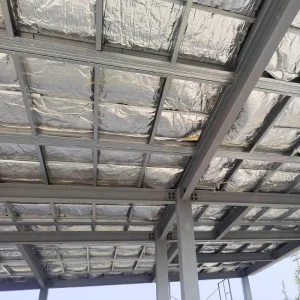
Multi-story metal buildings featuring robust internal structural mezzanine levels. This layout doubles usable floor space inside tightly regulated metropolitan footprints without expanding footprint boundaries.
Critical engineering metrics for strategic sourcing departments.
For international procurement managers, sourcing pre-engineered metal buildings requires rigorous technical verification. Structural durability depends heavily on meeting environmental load parameters specific to the project site. We perform structural analysis using site-specific wind loads, snow accumulations, and seismic coefficients based on local code requirements.
Equally critical is anti-corrosion protection. For typical logistics developments, steel frames should be hot-dip galvanized or coated with high-performance epoxy primers to resist rust, ensuring a maintenance-free design life of over 50 years. Additionally, evaluating shipping logistics, packaging efficiency, and field-assembly details is vital for preventing on-site delays.
| Engineering Parameter | Dhingia Performance Standard |
|---|---|
| Design Software | PKPM, Tekla Structures, AutoCAD |
| Primary Frame Work | Welded H-Section / Box Column (Q355B) |
| Purlin & Girt | C or Z Section Galvanized Steel (Q235B) |
| Cladding Panels | PIR/PUR/Rockwool Sandwich Panels (50-200mm) |
The shift toward sustainability, building automation, and high-performance building envelopes.
By using Building Information Modeling (BIM), we align steel frame fabrication with mechanical, electrical, and plumbing routing. This minimizes design conflicts, ensuring smooth on-site installation.
Steel is 100% recyclable. By optimizing material distribution through engineering design and using recycled content, prefabricated steel components support green building certifications.
Modern steel warehouse envelopes incorporate smart daylighting panels, high-efficiency insulation, and pre-integrated mounting rails for solar photovoltaic installations.
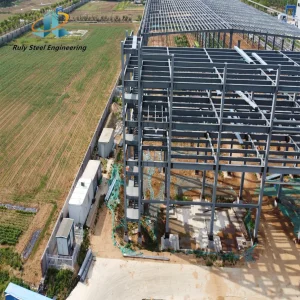
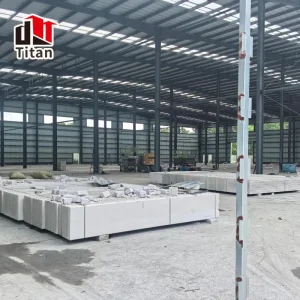
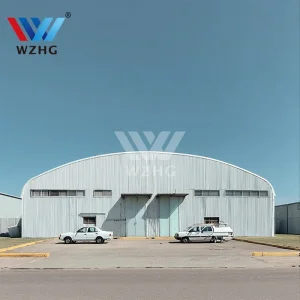
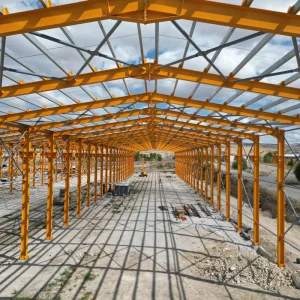
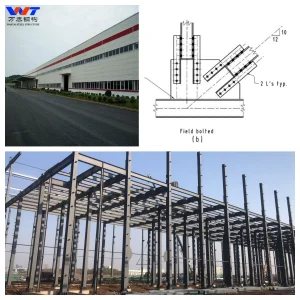
Explore our diverse range of engineering designs and configurations, fully customized for global industrial developers.
Detailed answers to direct questions regarding international compliance, design, shipping, and installation.
Yes. All of our engineering designs for the French market are calculated in accordance with the Eurocodes (specifically Eurocode 3 for steel design). We incorporate localized wind loads, snow loads (based on the precise department coordinates in Île-de-France), and seismic design categories. Our welding and structural steel fabrication processes meet rigorous ISO 9001 and international factory control guidelines, ensuring high reliability for structural building imports.
The structural components are systematically packed, bundle-secured, and loaded into 40ft Open Top (OT) or 40ft High Cube (HC) dry cargo containers at our Guangzhou manufacturing facility. Purlins, columns, and truss segments are marked with identification tags corresponding to the 3D assembly blueprints. We arrange transport to major ocean gateways such as the Port of Le Havre, from which standard container trucks carry the components directly to your Paris project site for erection.
Absolutely. Modern European warehouses must often comply with solar mandates. During the initial structural design phase, we add the dead load of the solar system (often 15 to 25 kg/m²) into the design calculations. Purlin spacing and truss configurations are reinforced accordingly to safely support photovoltaic panels and mounting rack systems without compromising structural integrity.
The typical lead time involves: 1) Structural drafting, mechanical engineering review, and client approval (2 to 3 weeks); 2) Advanced automated raw material preparation, robotic welding, shot-blasting, and coating (3 to 4 weeks); and 3) Ocean transport transit time from Guangzhou to Europe (typically 4 to 5 weeks). Consequently, the standard timeline from design sign-off to site delivery in France ranges between 9 to 12 weeks.
We offer single-skin steel sheets with anti-condensation felt, as well as insulated sandwich panels utilizing PIR (polyisocyanurate), PUR (polyurethane), or Rockwool cores. Thicknesses range from 50mm to 200mm, allowing you to specify thermal insulation levels that comply with French RE2020 energy standards for thermal envelope efficiency.
 Dhingia Build