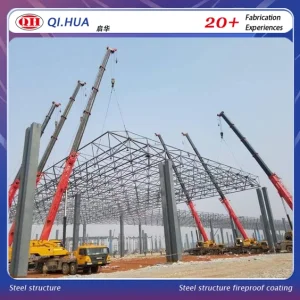
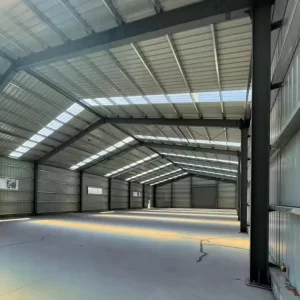
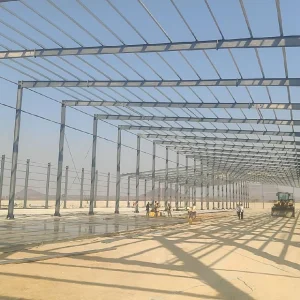
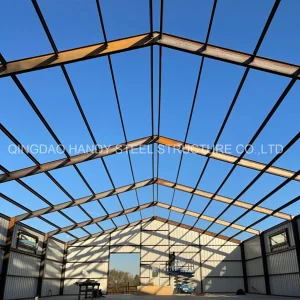
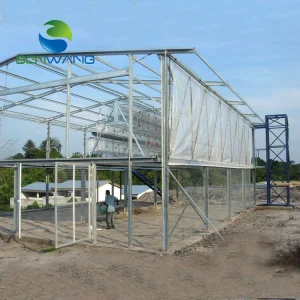
Explore our custom-engineered energy-efficient pre-engineered metal buildings, designed to optimize heat insulation, operational durability, and green compliance.
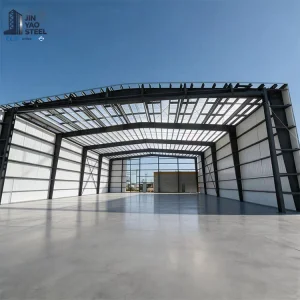
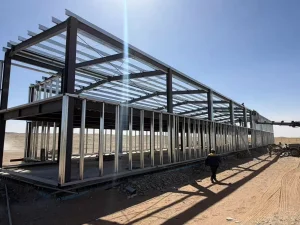
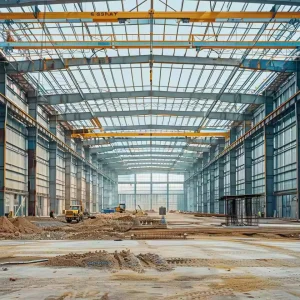
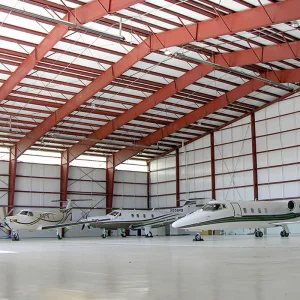
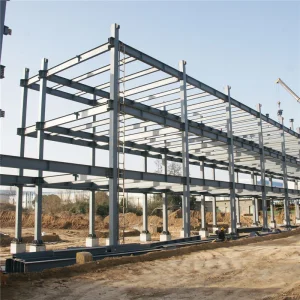
Guangzhou Dhingia Build Co., Ltd. is a professional China pre-engineered metal building manufacturer specializing in industrial steel structure solutions for customers around the world. With extensive expertise in steel construction engineering and prefabricated building technologies, the company is dedicated to providing high-quality, cost-effective, and customized building systems for diverse industrial and commercial applications.
The company offers a wide range of products, including pre-engineered metal buildings, industrial steel structures, steel warehouses, manufacturing plants, logistics centers, commercial buildings, workshop facilities, and custom-engineered construction solutions. Designed to meet international standards, these building systems are known for their structural strength, rapid installation, long service life, and excellent cost efficiency.
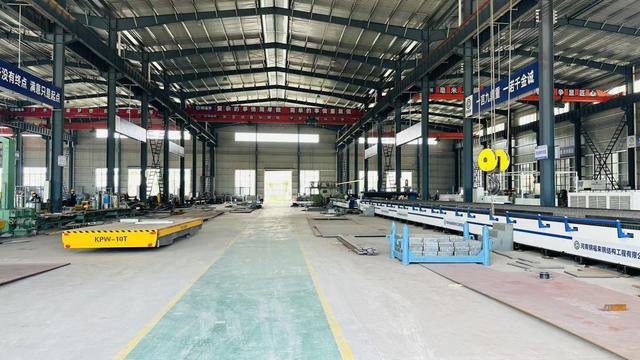
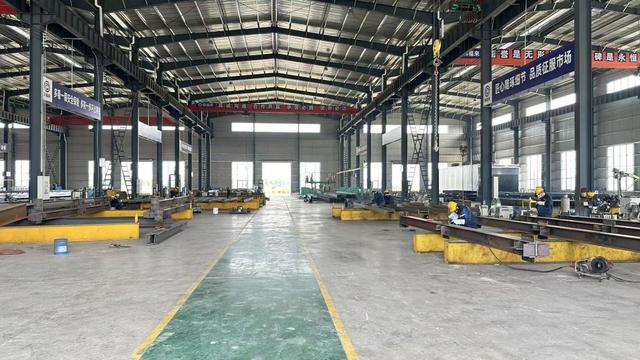
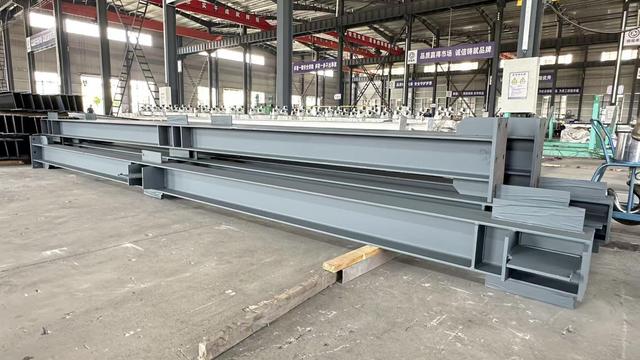
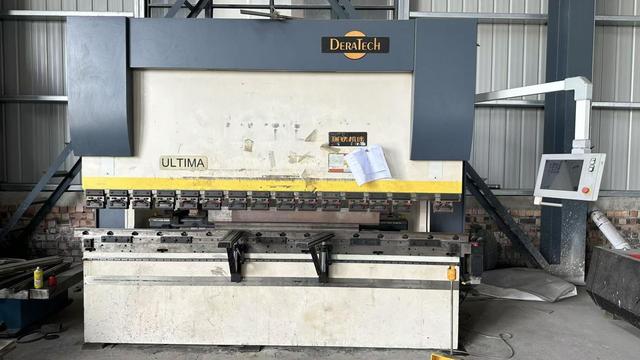
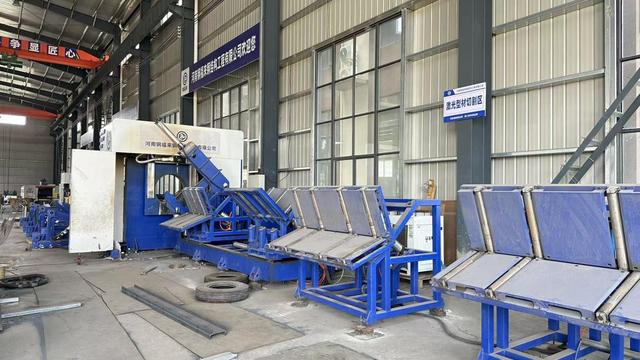
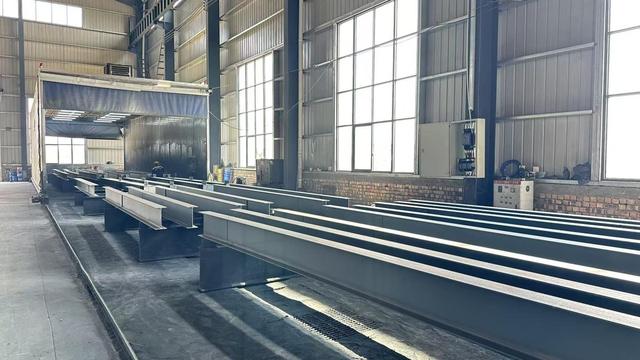
Guangzhou Dhingia Build Co., Ltd. operates modern manufacturing facilities equipped with advanced steel fabrication machinery, automated production lines, and comprehensive quality inspection systems. Supported by an experienced team of engineers, designers, and project managers, the company provides one-stop services covering project consultation, structural design, engineering analysis, manufacturing, quality control, and international logistics coordination.
Innovation and quality are fundamental to the company's development strategy. By integrating advanced design software and precision manufacturing technologies, Dhingia Build delivers reliable steel structure solutions that help customers reduce construction time, minimize labor costs, and improve overall project efficiency. The company's products are widely used in industrial production facilities, warehouses, agricultural buildings, commercial complexes, infrastructure projects, and large-scale storage applications.
Committed to the principles of quality, integrity, and customer satisfaction, Guangzhou Dhingia Build Co., Ltd. has established strong partnerships with clients across Asia, Europe, the Middle East, Africa, and the Americas. The company continues to provide innovative industrial steel structure solutions that support sustainable growth and create long-term value for global customers.
How Modern Metal Buildings Align with ESG Metrics and Net-Zero Building Targets
Pre-engineered steel is fully recyclable, minimizing downstream structural waste. Combined with advanced engineering, prefabricated building components exhibit low embodied carbon levels compared to traditional concrete frames.
High R-value envelope designs rely on insulated sandwich panels (PIR, PUR, Rockwool) to mitigate thermal bridging. These assemblies prevent cold bridging at structural joints, yielding substantial HVAC cost savings.
Utilizing high-tensile steel (Q355B / ASTM A572 Grade 50) permits larger clear spans with reduced weight. Less steel tonnage translates to lowered raw material and maritime transport emissions.
The industrial sector faces stringent green regulations, forcing developers to look beyond initial capital expenditure. Programs like the EU Green Deal, ASHRAE 90.1, and various national building codes dictate strict thermal envelopes for manufacturing facilities. Developers must design steel workshops, storage buildings, and hangars with optimized insulation to obtain local approvals.
Additionally, modern carbon accounting evaluates the entire structural lifecycle. Working with an experienced exporter ensures that all structural components—from main frames (H-sections, box columns) to secondary cold-rolled frames (C & Z purlins)—align with LEED, BREEAM, or DGNB standards. Using low-emission galvanization methods and VOC-compliant coatings protects both environmental and worker safety.
Addressing the Key Priorities of Procurement Managers and Engineering Consultants
Procuring metal buildings internationally involves analyzing total cost of ownership (TCO), lead-time reliability, regulatory compliance, and structural integrity. A successful procurement workflow must address several critical criteria:
| Procurement Parameter | Traditional Metal Buildings | Dhingia's Energy-Efficient Buildings | Project Value Impact |
|---|---|---|---|
| Thermal Envelope (U-Value) | 0.45 - 0.60 W/(m²·K) (Single sheets, basic fiberglass) | 0.20 - 0.28 W/(m²·K) (PIR/Polyurethane Sandwich) | Reduces heating and cooling energy use by up to 45%. |
| Structural Span Efficiency | Standard spans; requires intermediate columns | Custom wide span, up to 60m clear-span spacing | Optimizes warehouse floor plans and logistics operations. |
| Corrosion Resistance | Standard alkyd priming (low protection) | Hot-dip galvanizing (≥275g/m²) or multi-layer epoxy | Extends structural lifespan to 50+ years in marine/C4 environments. |
| On-site Assembly Time | Extensive welding and site modifications required | 100% pre-punched, pre-drilled bolt connections | Cuts installation schedules and field labor costs by 30-40%. |
Engineering departments look for detail-oriented manufacturers who understand structural tolerances, load conditions (wind, seismic, snow), and international standards (AISC, Eurocode, GB). A small planning error can cause site delays, custom clearance holds, or structural failures. Guangzhou Dhingia Build Co., Ltd. uses Tekla Structures and PKPM software to generate exact 3D models before fabricating. This guarantees that all anchor bolts, crane beams, and bracing brackets align perfectly on-site.
High-performance insulated building envelopes designed for logistics, manufacturing, and food storage.
The building envelope is the primary defense against thermal energy transfer. We offer sandwich panel profiles tailored to specific thermal and fire-safety requirements:
Standard metal structures often suffer from cold bridging at girt connections, purlin intersections, and column bases. Our design incorporates thermal-break gaskets and engineered isolation spacers. This keeps the interior dew point stable, preventing condensation and rust within wall and roof cavities.
Industrial facility roofs are increasingly used for solar arrays. Our roofs feature standing seam systems (like the 360-degree double-lock seam) that permit direct solar-clamp mounting. This system requires no sheet penetration, maintaining a waterproof barrier while supporting clean energy generation.
How we ensure global compliance, smooth logistics, and seamless installation.
Different jurisdictions present unique compliance requirements. Our engineering team designs structures according to several international standards:
Our Quality Assurance department tests raw materials and welds to guarantee structural integrity. We conduct non-destructive testing (NDT), including ultrasonic and magnetic particle inspections, on load-bearing weldments. Steel components are pre-assembled at the factory to confirm dimensional tolerances before packing.
To avoid transit damage, structural columns and trusses are bundled with protective steel cradles. Panels are crated in seaworthy packaging. Every shipment includes detailed assembly drawings, packing lists, and component-coded erection manuals. For complex installations, we can dispatch project managers to supervise erection crews on-site.
Embracing technology to build smarter, greener, and more resilient steel structures.
We are increasing our use of steel made from Electric Arc Furnaces (EAF) utilizing recycled scrap. This process significantly reduces the upfront carbon footprint compared to traditional blast furnace methods.
Integrating structural designs into Building Information Modeling (BIM) workflows. This provides operators with accurate structural data to streamline facilities management and future expansions.
Adjusting design standards to withstand more volatile wind events, heavier snow loads, and extreme thermal swings, ensuring long-term structural reliability.
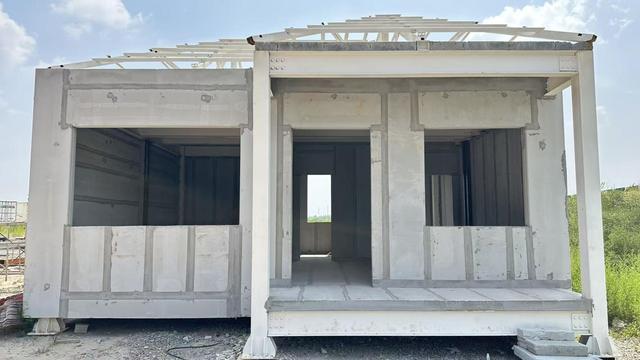
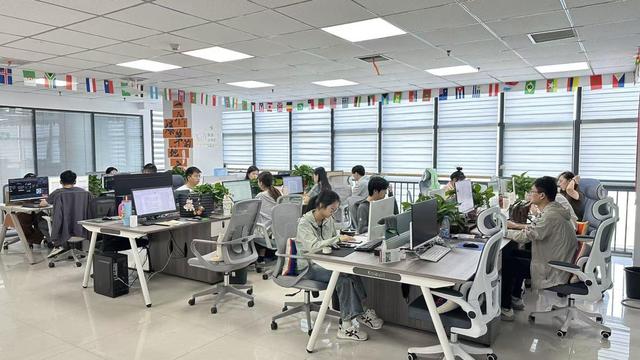
Take a virtual tour of Guangzhou Dhingia Build Co., Ltd.'s modern manufacturing facilities and advanced fabrication capabilities.
Technical answers to common questions about procuring energy-efficient metal buildings from China.
The thermal efficiency is determined by the selection of insulation material (such as PIR/PUR sandwich panels), the thickness of the insulation, the design of thermal breaks to avoid cold bridging, and the overall airtightness of the building's joints and envelope.
Yes, our engineering team designs structural calculations to match your site-specific seismic zone, wind speed rating, and snow load requirements, using standards such as AISC, Eurocode, or AS/NZS.
PIR (Polyisocyanurate) is an evolution of PUR (Polyurethane) that offers superior fire resistance, self-extinguishing properties, and a slightly higher thermal R-value, making it the preferred choice for industrial facilities requiring high fire-safety compliance.
We apply heavy-duty hot-dip galvanizing treatments (up to Z275 or AZ150) or high-durability epoxy primer paint systems. These coatings shield the primary steel frame from oxidation in high-salinity and high-humidity environments.
We secure and package all building components inside open-top or standard 40ft HQ containers. We use shipping-ready coding, customized bundles, and detailed cargo lists to make unpacking and customs clearance straightforward.
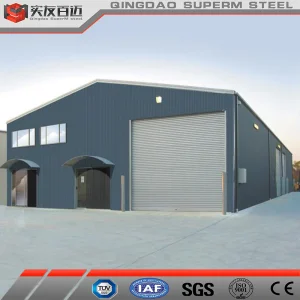
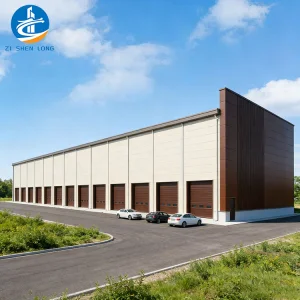
Complete your procurement evaluation with our range of heavy-duty warehouses, workshops, office buildings, and specialized agricultural structures.
 Dhingia Build