Construction schedules are often lost in small, familiar delays: waiting for materials, coordinating trades, or working around rain. Prefabrication changes where some of that work happens. Components such as wall panels, service modules, or bathroom pods are produced off-site while foundations and other site work continue. The result can be fewer tasks competing for space and time on the jobsite. But it is not automatic.
So, how does prefabrication speed up construction projects? A 2019 McKinsey report, Modular construction: From projects to products, estimated that modular construction could shorten project schedules by 20–50 percent. That range is significant, but it describes potential—not a guaranteed result for every project. Design decisions, factory capacity, transport, crane access, and installation sequencing all affect the outcome. A panel made early still cannot help if drawings change or the site is not ready.
The practical advantage is overlap. While crews pour foundations, a factory team may be assembling repeatable components under controlled conditions. Fewer weather interruptions and more consistent workflows can make progress easier to plan. Yet off-site work also moves some risk upstream: late design changes may require costly rework before components arrive. That detail is easy to underestimate. Prefabrication works best when teams coordinate early, standardize where sensible, and check tolerances before delivery. This article examines the mechanisms behind the time savings, the conditions that support them, and the limits project teams should consider before choosing this approach.
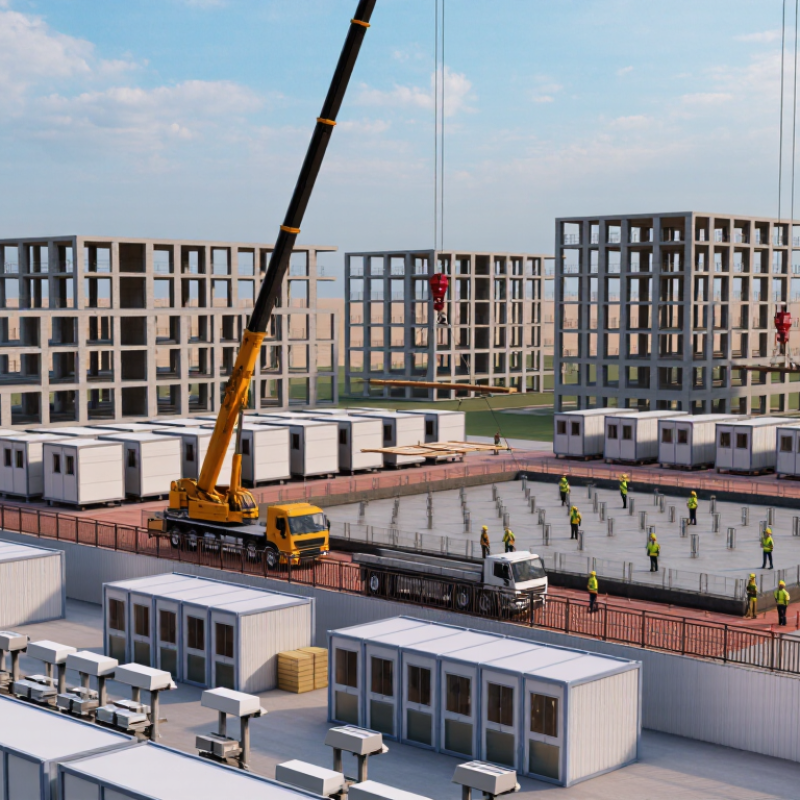
Prefabrication can shorten a construction schedule because factory production and site preparation happen in parallel. While crews pour foundations, install drainage, and prepare utility connections, components are assembled indoors. Wall panels, floor sections, and service modules can be checked before delivery. This overlap reduces the wait between site readiness and building assembly. Less waiting matters.
Tips: Align drawings, dimensions, and delivery dates early. Keep access roads clear for trucks and lifting equipment. A small mismatch can stall installation.
The process is not magically faster. A late design change may require factory rework, while poor weather can still delay site tasks. Teams should coordinate inspections, crane access, and storage space before components arrive. For example, panels need a level unloading area near the assembly zone. If they sit too far away, workers spend time moving them instead of installing them. Parallel work saves time only when schedules and measurements match; that coordination takes effort, and it can be overlooked.
Illustrative schedule comparison for a hypothetical project. Durations are planning assumptions, not universal industry benchmarks; actual schedules depend on project scope, design readiness, approvals, procurement, and site conditions.
| Project phase | Conventional sequence | Prefabricated approach | How parallel work affects the schedule |
|---|---|---|---|
| Design and coordination | 20 working days | 20 working days | Both schedules begin with design. Early coordination is important because factory components must match site dimensions and connection details. |
| Site preparation and foundations | 30 working days, after design | 30 working days, after design | Groundwork and foundation construction prepare the site for delivery and installation. |
| Building structure or component production | 40 working days of on-site construction, after site preparation | 40 working days of factory production, concurrent with site preparation | This is the main overlap: factory work can progress while crews prepare the site, provided design information and required approvals are ready. |
| Delivery and installation | Included in the on-site construction period above | 10 working days, after site and components are ready | Factory-made sections are transported and assembled on prepared foundations; delivery sequencing and access must be planned. |
| Finishing and commissioning | 20 working days | 20 working days | Remaining connections, finishes, inspections, and commissioning follow installation or structural completion. |
| Illustrative elapsed duration | 110 working days 20 + 30 + 40 + 20 |
90 working days 20 + max(30, 40) + 10 + 20 |
In this example, overlapping production and site preparation reduces the planned elapsed duration by 20 working days, or about 18%. |
Schedule calculation assumes factory production starts after design and proceeds at the same time as site preparation. The comparison is illustrative and does not account for weather, permitting, transport constraints, change orders, or other project-specific delays.
Factory teams build panels or mechanical racks while crews prepare the site. The tasks overlap. Less waiting can shorten the schedule.
One industry report estimated reductions of 20 to 50 percent under suitable conditions. That range is broad. It is not a guarantee.
Wall panels, bathroom pods, and preassembled mechanical racks can arrive ready for installation. Crews then focus on lifting, connecting, and checking them.
Teams need coordinated drawings, accurate measurements, early design decisions, and timed deliveries. Small handoffs matter.
No. Foundations, inspections, and utility connections still take time. Weather and limited access can also disrupt work.
Changes may force rework in the factory and on site. A misplaced opening can waste time before a component even arrives.
A panel may be ready, but the site still needs room to unload it. If the crane is not ready, the panel becomes storage. Not speed.
Test delivery routes and lifting plans before production begins. Then compare planned and actual installation times each week. The site may still surprise everyone.
Prefabrication can shorten construction schedules by allowing factory production and site preparation to happen at the same time. While crews prepare foundations and utilities, components are manufactured off-site, reducing the wait between early construction stages. Standardized parts also simplify installation: instead of completing many tasks from scratch on-site, workers can assemble pre-made sections with fewer steps and less disruption.
To understand how does prefabrication speed up construction projects, it helps to consider the benefits of a controlled manufacturing environment. Indoor production is less exposed to weather, and consistent processes can help limit defects and rework. Once components arrive, efficient assembly can move key stages forward quickly. The actual time savings, however, depend on thoughtful design, transport planning, and coordination between the factory, delivery teams, and site crews. When these elements are aligned, prefabrication can make project timelines more predictable while reducing delays caused by on-site conditions.

 Dhingia Build